🎯 Customer Targeting Strategy
Client: Nivea
Duration: Feb 2022 – Feb 2023
Tools: Python, SQL, MySQL, Pandas, NumPy, Scikit-learn, PyTorch, Matplotlib, Seaborn, Tableau, Excel, Alibaba Cloud
📌 Project Overview
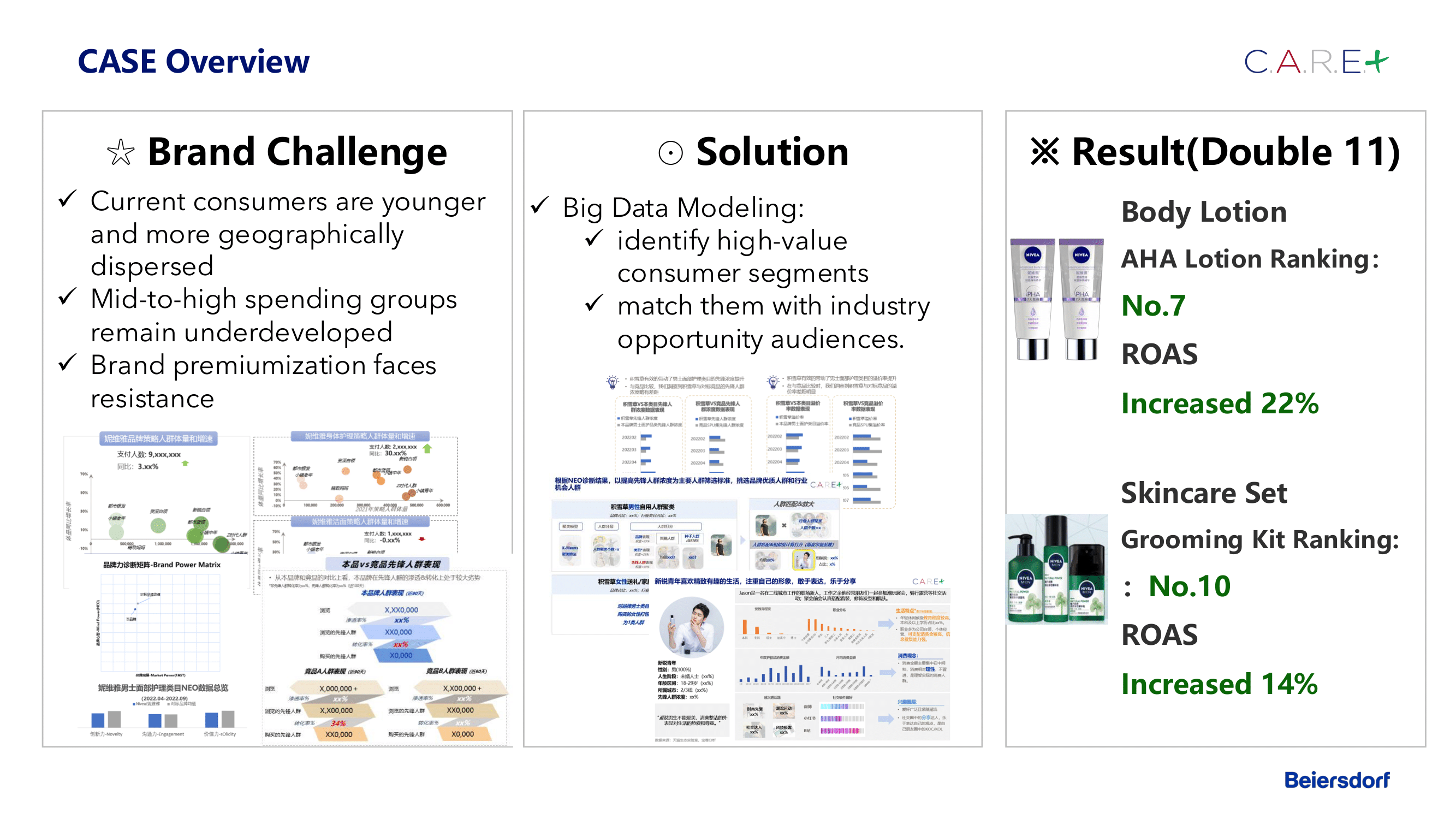
Developed data-driven targeting strategies by analyzing e-commerce user profile data to identify high-potential customer segments. Validated insights with a full-scale campaign rollout, leading to a 14.3% YoY increase in ad effectiveness.
🧠 Techniques & Methodologies
-
Advanced Segmentation:
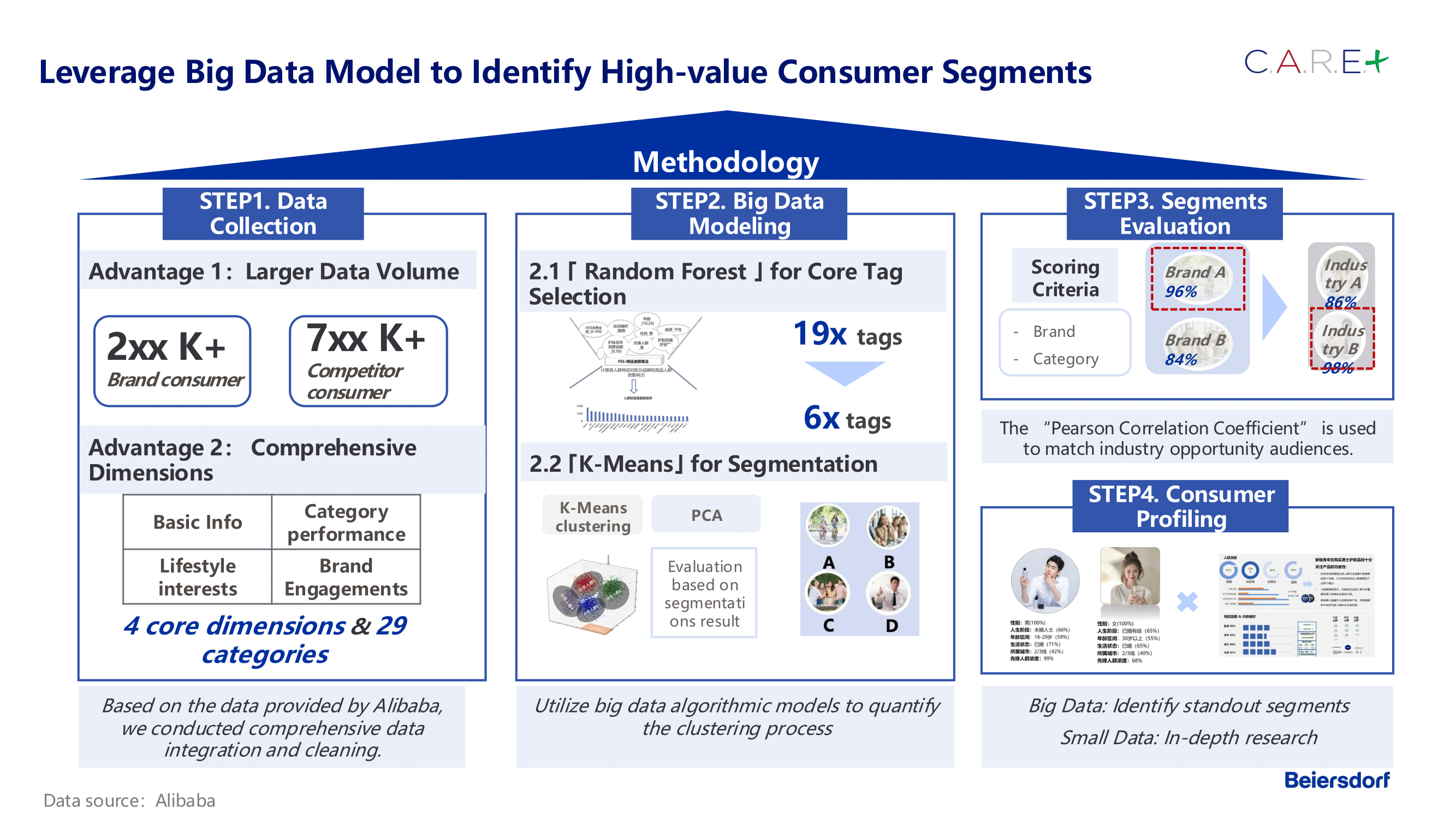
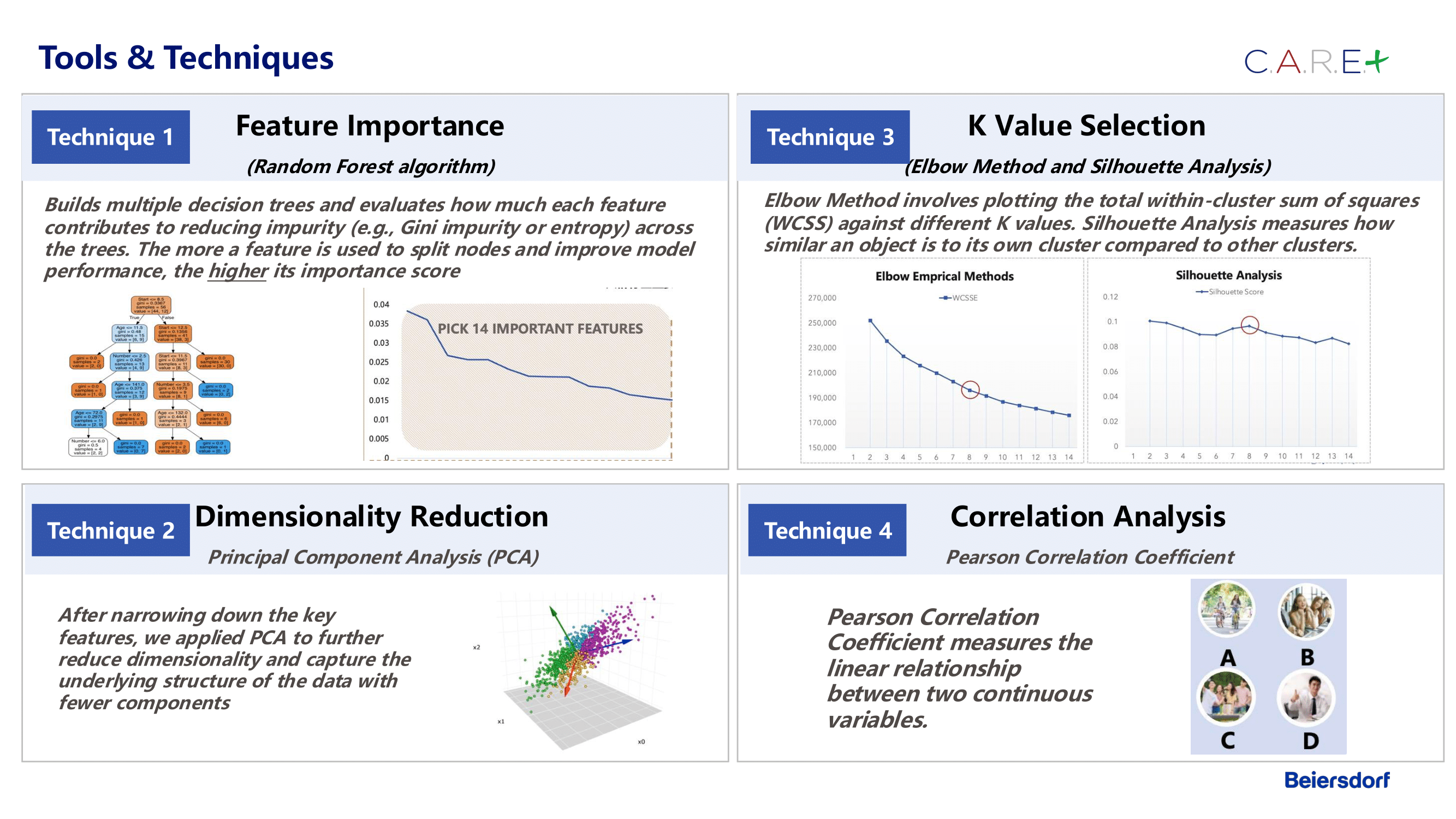
Used K-Means Clustering and Random Forest to segment users by behavior, demographics, and browsing history. -
Predictive Modeling:
Implemented Linear Regression and RFM (Recency, Frequency, Monetary) models to predict conversion likelihood and customer lifetime value. -
A/B Testing:
Executed experiments, increasing Return on Ad Spend (ROAS) by 12.5% over baseline recommendations. -
Big Data Processing:
Cleaned and modeled Alibaba e-commerce data across 29 categories and 4 core dimensions.
📊 Key Findings & Results
- Improved ROAS:
- Body Lotion (AHA) → ROAS ↑ 22%
- Skincare Set → ROAS ↑ 14%
- Segment Insights:
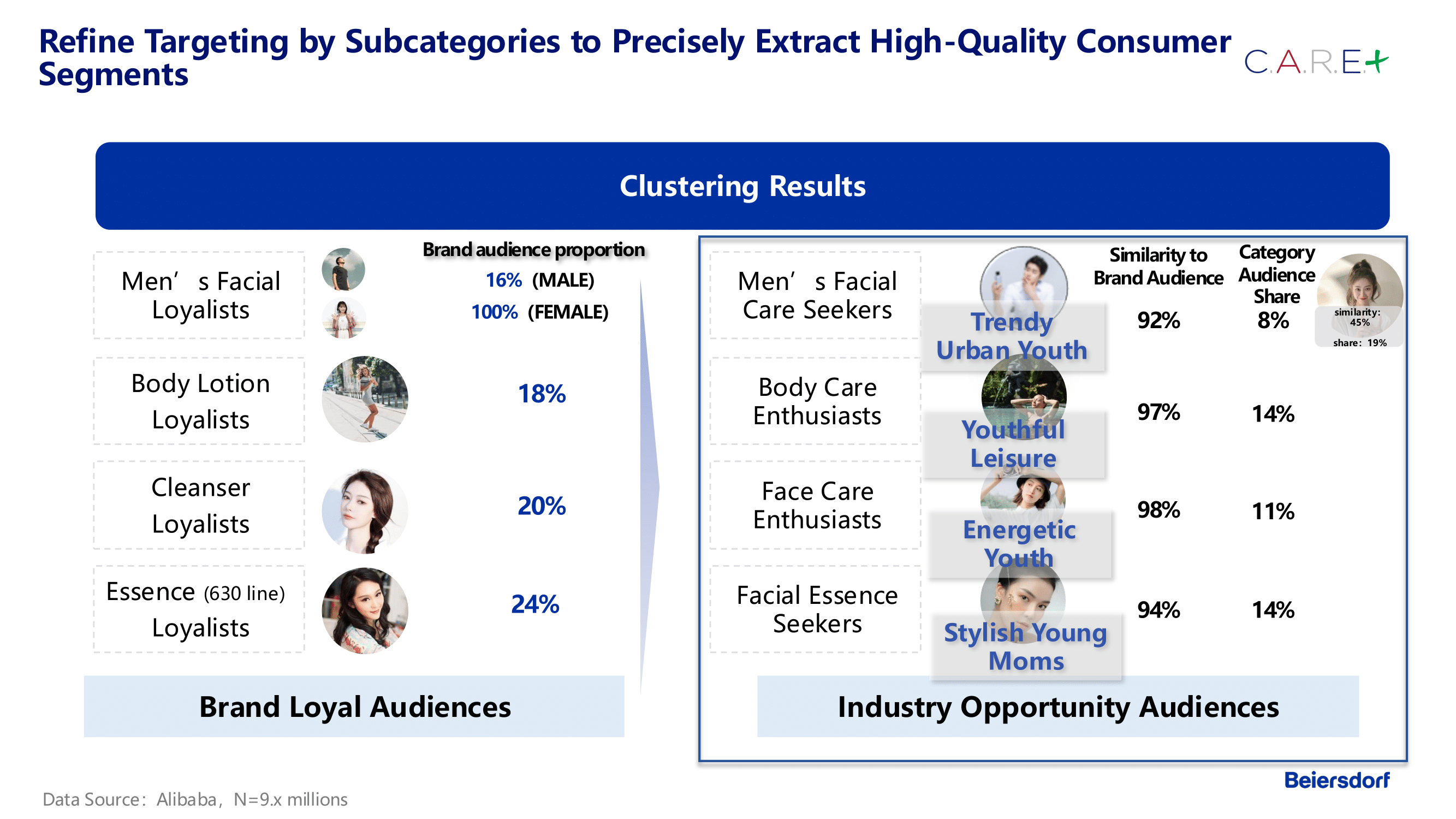
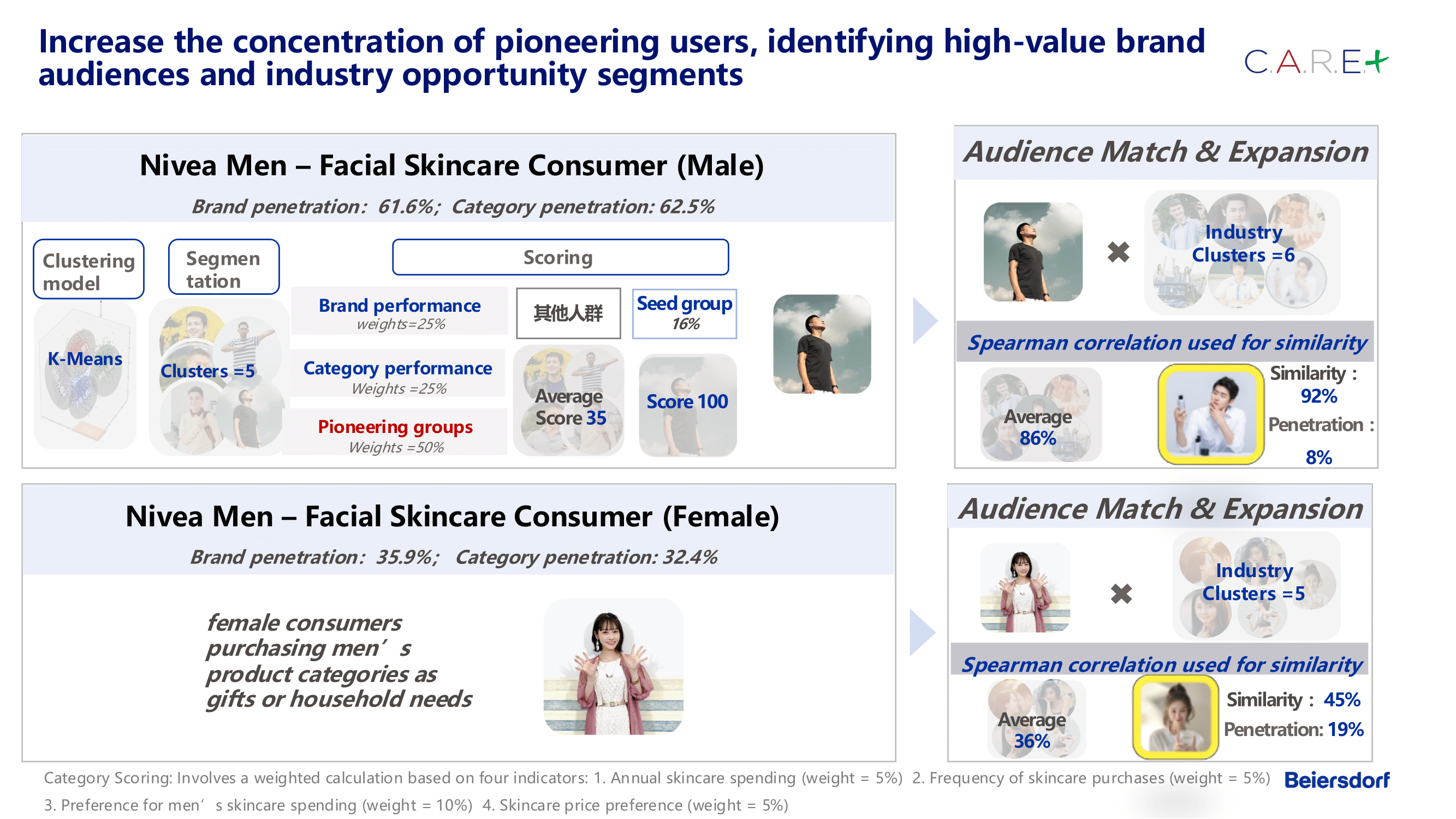
- Identified segments like “Trendy Urban Youth” and “Stylish Young Moms” with high brand alignment and opportunity match.
- Used PCA, Pearson/Spearman correlations, and Silhouette Analysis to optimize clustering.
📈 Methodology Steps
- Data Collection (from Alibaba platform)
- Tag Selection & Segmentation using Random Forest & K-Means
- Segment Evaluation via Pearson Correlation Coefficients
- Consumer Profiling to refine targeting
🖼️ Visuals & Deep-Dive Slides
🔗 GitHub Repository
Explore the source code and documentation for the Othello Game: